You're Just a Prop: How Scottsdale Turned Its Nightlife Into a Live-Action Screensaver
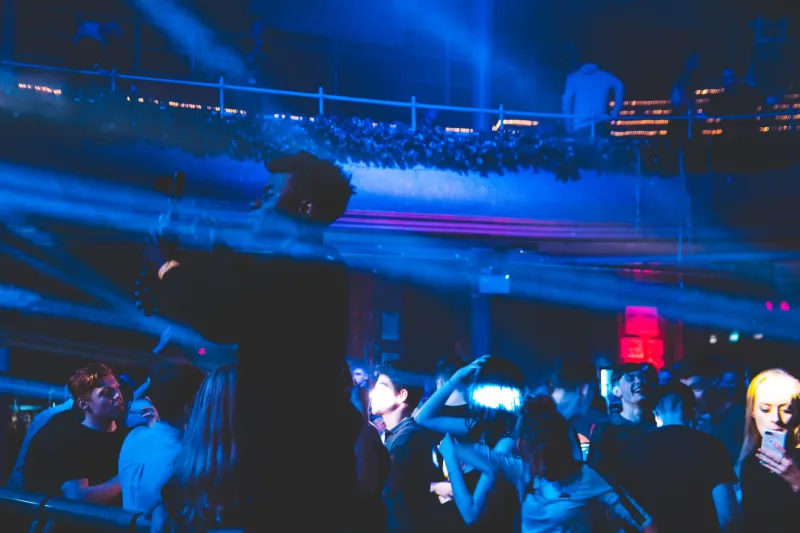
Somewhere between your third overpriced cocktail and the moment you caught yourself adjusting your posture because someone nearby had a camera out, it happened. You stopped being at the party and started performing at it. Don't feel bad. It's not a personal failing. It's Scottsdale doing exactly what it was engineered to do.
The city didn't stumble into this. It was built, brick by Instagram-worthy brick, into the most elaborately staged nightlife experience in the American Southwest. And the uncomfortable truth — the one nobody wants to admit while they're sipping a $22 mezcal negroni under Edison bulbs — is that you are not the main character. You are the ambient content.
The Set Was Designed Before You Got There
Let's start with the architecture of the illusion. Modern Scottsdale venues don't just open their doors and hope for the best. They hire interior designers whose entire brief is photogenic chaos — the appearance of a wildly good time that also happens to be composed like a magazine spread. The flower walls aren't accidental. The neon signs aren't impulse buys. The custom-printed cocktail napkins with the venue's logo aren't there for your mouth — they're there for your camera roll.
Every surface in a top-tier Old Town venue has been stress-tested against a phone screen. Lighting rigs are calibrated to make everyone look like they've had exactly the right amount of fun — glowy, flushed, alive — without the unflattering chaos of actual debauchery. You walk in and think, wow, this place has a vibe. What you're actually experiencing is a mood board made three-dimensional.
The result is an environment where genuine spontaneity becomes structurally impossible. You can't have an unplanned, ugly, hilarious moment in a room that was specifically designed to prevent ugly, unplanned moments from occurring.
The Algorithm Has a Table Minimum
Here's where it gets psychologically interesting. Scottsdale venues have quietly figured out that their real product isn't bottle service or bespoke cocktails — it's content distribution. Every time a patron posts a Story from inside the venue, that's free advertising reaching an audience the club could never buy at scale. So the incentive structure has been flipped entirely.
Venues don't just tolerate the phone-out, pose-up behavior. They actively engineer it. Sparklers on bottle service aren't about the drama of the moment — they're a ten-second video guaranteed to go up before the ice melts. The elaborate garnishes on cocktails aren't culinary artistry; they're a still-life photograph waiting to be taken. The VIP section elevated above the floor isn't about exclusivity — it's about sightlines. Being seen being there is the product, and you're both the consumer and the delivery mechanism.
What this creates, psychologically, is a room full of people performing enjoyment rather than experiencing it. You're not dancing because the music moved you. You're dancing because you're aware, on some low-frequency level, that someone might be filming and you want to look like someone who dances. The feeling follows the performance, if it shows up at all.
Nobody Here Is Off-Duty
Spend enough time in Scottsdale's nightlife ecosystem and you start to notice that the social interactions themselves have been aestheticized beyond recognition. Conversations are shorter, louder, and more declarative than they used to be — punchlines without setup, reactions without context. Because nuance doesn't translate on a Story.
People introduce themselves with their profession or their social media handle before their actual name. Groups coordinate outfits not because they're a sports team but because a cohesive color palette photographs better. The bachelorette parties — God bless them, they are at least honest about being a production — have simply made explicit what everyone else is doing implicitly.
Even the arguments look staged. The dramatic exit. The pointed glance across a crowded room. The tearful reconciliation on the patio. It's not that these emotions aren't real — some of them absolutely are — it's that they've been unconsciously formatted for an audience that may or may not be watching.
Authenticity, in this context, has become the most performative choice of all. The person loudly insisting they don't care how they look is doing it in a way that photographs extremely well.
Why You Keep Coming Back to a Party You're Not Really At
This is the part that should bother you more than it does. The Scottsdale Simulator is genuinely compelling, even after you've clocked the machinery behind it. Partly because the production values are legitimately impressive — these venues are beautiful, the drinks are often excellent, and the people-watching is world-class. But mostly because the alternative — staying home, being boring, missing whatever everyone else is apparently experiencing — feels worse.
FOMO has always driven nightlife. But in Scottsdale, FOMO has been industrialized. The feed is a constant highlight reel of people having the time of their algorithmically optimized lives, and the gap between what you're experiencing in the room and what the room looks like on a phone screen creates this persistent, low-grade dissatisfaction. You're there, but you're not there there. You're watching yourself be there.
Psychologists have a term for this: self-objectification. The experience of observing yourself from an external vantage point rather than inhabiting your own perspective. Scottsdale has essentially made this the default setting for a Saturday night.
The Rarest Thing in Old Town
Every once in a while — usually late, usually after something goes sideways in a minor but memorable way — the simulation glitches. The phone dies. The table next to you does something genuinely unhinged and everyone forgets to film it. The DJ plays something unexpected and the crowd reacts like real humans rather than a curated audience. Someone laughs so hard they spill their drink and nobody cares.
Those moments are the ones you actually remember. Not the perfectly lit booth photo. Not the sparkler video. The ugly, unscripted, unglamorous 45 seconds when Scottsdale briefly forgot to perform itself and just happened instead.
Chase those. They're in there somewhere, buried under the flower walls and the table minimums and the very tasteful neon. Scottsdale is still a city full of actual human beings capable of actual human experiences — they've just been handed a very elaborate costume and told the show starts at 10.
You can wear the costume. Just don't let it wear you.