Hooked on Rejection: The Dark Psychology Behind Scottsdale's Most Addictive Nightlife Trap
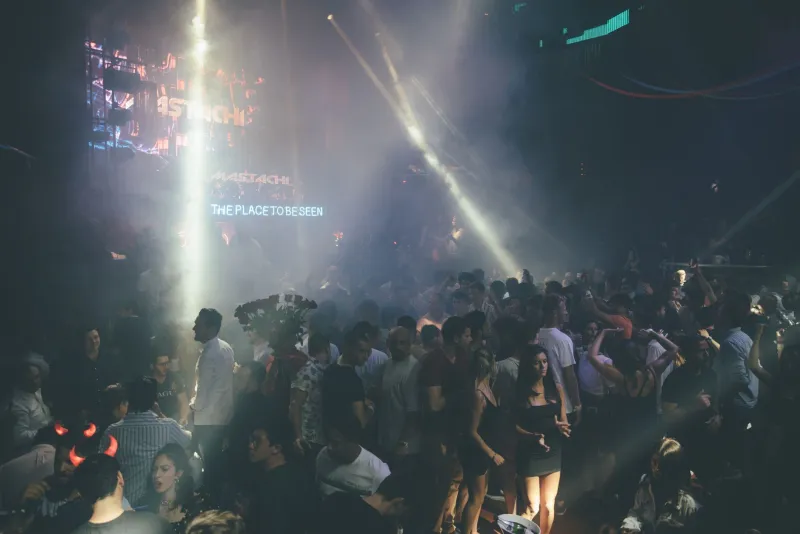
Let's get something straight before we go any further. That club on Old Town's main drag that made you wait 45 minutes in ninety-degree heat, charged you a $40 cover, seated you at a table with a sight line directly into the service corridor, and then ignored you for twenty minutes before a bottle of mediocre vodka arrived — that club does not like you. It never did. And yet, somehow, you're already thinking about going back next weekend.
Welcome to the Scottsdale trap. Population: everyone who's ever stood outside a velvet rope convincing themselves this time will be different.
The Architecture of Manufactured Desire
Scottsdale's nightlife machine didn't stumble into this dynamic by accident. The exclusivity theater you experience every Friday and Saturday night is deliberately, almost surgically, engineered. The long lines aren't logistical failures — they're marketing. The indifferent host who looks through you instead of at you isn't having a bad night — that's a trained performance. The VIP section positioned just close enough to the general floor that you can see it but not touch it? That's not a layout choice. That's a psychological pressure point.
The industry borrows heavily from what behavioral economists call variable reward scheduling — the same mechanism that makes slot machines so brutally effective. When the reward is unpredictable, the brain doesn't disengage. It doubles down. Some nights you sail past the rope and feel like a god. Other nights you're turned away in front of a group of strangers and want to dissolve into the pavement. The inconsistency isn't a bug. It's the entire product.
Status as Currency, Humiliation as the Cost of Entry
Here's the part nobody wants to admit at brunch the next morning: the humiliation is part of the transaction. Scottsdale's top venues have figured out that social status is worth more to their clientele than comfort, good service, or even a genuinely good time. The ability to say you got into a certain room — to post from a certain booth — carries social weight that a pleasant evening at a reasonable bar simply can't compete with.
So the venues hold that social currency over your head like a piñata at a kids' party, except you're the kid and you never actually get the candy. They dangle access, retract it, occasionally grant it, and charge you a premium at every single stage of the process. You're not buying drinks. You're buying the story of being someone who got in.
And the twisted genius of it is that the worse they treat you, the more valuable the access seems. If anyone could waltz in on a Tuesday and get a table without a reservation, a host fee, a minimum spend, and a silent judgment about your footwear — would you even want to be there? Probably not. The exclusion is load-bearing. Remove it and the whole illusion collapses.
FOMO as a Business Model
Scroll through Instagram on any given Saturday night and Scottsdale's nightlife looks like a highlight reel from a very expensive, very attractive fever dream. Rooftop pools glittering under desert stars. Bottle service parades that look like religious processions. Crowds of people who appear to be having the best night of their lives in real time.
What you're not seeing: the two hours of staging that went into that one photo. The friend group that's been silently miserable since midnight because the music is too loud to talk and the drinks are too expensive to order freely. The couple fighting near the bathrooms. The guy who dropped $800 on a table and is doing the math on his phone with one eye closed.
The content isn't documentation. It's recruitment. Every post is a passive-aggressive invitation that says you should be here — and by extension, you're not here, and that says something about you. Scottsdale's venues understand that their real marketing budget lives in the phones of their own customers. You're not just a guest. You're an unpaid promotional asset generating FOMO for the next wave of people who'll show up next weekend ready to spend money chasing the version of the night they saw online.
The Loyalty Trap Nobody Acknowledges
Spend enough time in Scottsdale's circuit and something insidious starts to happen. You begin to develop what feels like loyalty to venues that have given you zero rational reason for it. You've been overcharged, undertreated, and occasionally straight-up disrespected — and yet you find yourself defending these places to out-of-towners, requesting them by name when you're organizing a group night out, and feeling a small, embarrassing pang of pride when a host finally remembers your face.
This is the sunk cost fallacy dressed up in a blazer and a wristband. The more time, money, and ego you've invested in cracking a venue's social code, the harder it becomes to admit that the code isn't worth cracking. Admitting the game is rigged means admitting you've been playing it — and losing — for longer than you'd like to count.
The venues know this. They bank on it. A customer who's already emotionally invested is exponentially more valuable than a new one. So they give you just enough — a nod from the host, a complimentary shot that costs them nothing, a slightly better table than last time — to keep the investment feeling worthwhile. It's the nightlife equivalent of a bad relationship where the occasional good weekend keeps you from doing the math on all the bad ones.
What You're Actually Buying
Strip away the lighting and the DJ and the Instagram-ready aesthetic and what Scottsdale's most predatory venues are actually selling is a feeling — specifically, the feeling of being chosen. In a city that runs on social competition and appearance management, being visibly selected by a desirable venue scratches a very deep psychological itch. It says something about you, or at least it feels like it does.
The problem is that the feeling is fleeting by design. The venues need you to come back. If one great night was enough, you'd be satisfied and move on. So the experience is calibrated to feel almost-but-not-quite complete. The table was good but not great. You got in but didn't get the treatment you imagined. You had fun but not that kind of fun. There's always a slightly better version of the night dangling just out of reach, and reaching for it costs money.
Getting Out of the Loop
The first step — and honestly the hardest one — is simply naming what's happening. Scottsdale's nightlife ecosystem is not a collection of venues that happen to be exclusive. It's a carefully maintained psychological environment designed to keep you slightly off-balance, perpetually aspiring, and consistently spending. Once you see the machine, it's harder to let it run on you unnoticed.
None of this means you have to stop going out. Scottsdale has genuinely great bars, legitimately fun venues, and nights that deliver exactly what they promise without making you feel like a contestant on a show you didn't audition for. They just don't tend to be the ones with the longest lines and the coldest hosts.
But if you find yourself back outside that rope next Saturday, sweating through your outfit and rehearsing what to say to the guy with the clipboard — at least go in with your eyes open. You know what the game is now. Whether you keep playing it is entirely up to you.