Hype, Hubris, and an Empty Dance Floor: The Scottsdale Nightlife Graveyard Nobody Wants to Talk About
There's a particular smell in Scottsdale that locals have learned to recognize. It's not the desert sage or the sunscreen. It's the scent of a grand opening — overpriced signature cocktails, a fog machine working overtime, and a DJ who charges more per hour than a cardiovascular surgeon. You've been there. You've stood in the line, paid the cover, and watched influencers pretend to enjoy drinks they definitely didn't pay for.
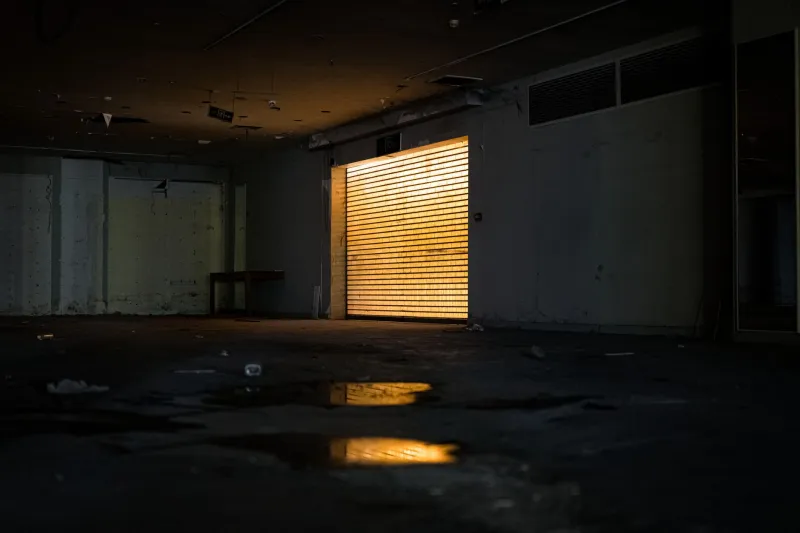
And then, roughly eight to eleven months later, you drive past the same address and there's a paper sign on the door. Maybe a vague "Thank You Scottsdale" Instagram post. Maybe nothing at all. Just silence, a padlock, and a Yelp page full of reviews that now read like a crime scene report.
Welcome to the Scottsdale Nightlife Graveyard. Population: embarrassingly high.
The Blueprint for Disaster
Every failed concept in Scottsdale follows a suspiciously similar script. It starts with a concept deck — usually something involving the words "immersive," "experiential," or, God help us, "disruptive." There's always a visionary founder who has either (a) visited Las Vegas once and decided they could replicate it in Old Town, or (b) read a TechCrunch article about the future of hospitality and taken it as gospel.
Funding materializes from some combination of angel investors, family money, and at least one guy who got lucky in crypto and needed somewhere to park it. The buildout is lavish — custom LED installations, $40,000 worth of velvet furniture, a bar top made from reclaimed wood that cost more than a Toyota Camry. The Instagram content from construction alone generates thousands of followers.
Then they open. And for about six weeks, it actually works.
The Six-Week Honeymoon
Scottsdale crowds are nothing if not curious. The city runs on novelty, and a shiny new venue with a mysterious concept and a waitlist gives people exactly what they crave: something to talk about at brunch. The first few weekends are electric. There are lines. There are paparazzi-style photos. There are micro-influencers in the VIP section who were comped bottles in exchange for posts that collectively reach about 200,000 people, most of whom live in Phoenix and will never actually visit.
The founders post revenue screenshots to their private Slack channels. Investors nod approvingly. Someone pitches a second location in Tempe.
And then, quietly, the crowd moves on.
When the Algorithm Stops Caring
Here's the thing about Scottsdale's nightlife crowd: their attention span is not measured in months. It's measured in news cycles. The moment a newer, shinier concept teases its opening on Instagram — maybe it's a speakeasy where you enter through a vintage refrigerator, maybe it's a rooftop bar with a retractable ceiling and a live snake handler — the previous "it" spot starts hemorrhaging its core audience.
This is the part that concept founders consistently fail to account for. They build their entire business model around opening-night energy. The revenue projections assume that week six looks like week one. It never does. The influencer visits dry up because influencers, by professional necessity, must always be somewhere new. The organic foot traffic that was supposed to follow? It follows the influencers.
What's left is a beautiful, expensive room full of operational overhead and a DJ still playing to a crowd that's thinned to a dozen people who are only there because they couldn't get into the place down the street.
The Crypto Club, the AI Lounge, and Other Crimes Against Common Sense
The trend-chasing gets particularly lethal when founders latch onto whatever cultural moment is peaking in the broader zeitgeist and try to build a nightlife concept around it. Scottsdale has been a willing laboratory for some truly bewildering experiments.
The crypto-themed lounge was perhaps the most predictably tragic. Launched during the peak of NFT mania, it accepted digital currency for bottle service, featured digital art walls displaying live blockchain transactions, and had a members-only area accessible only by scanning a QR code linked to a proprietary token. It closed before the token was worth enough to buy a well drink.
Then came the AI-driven cocktail bar, where an algorithm supposedly curated your drink order based on your "emotional state" as determined by a brief survey on an iPad. The cocktails were fine. The concept was exhausting. Nobody wanted to fill out a personality quiz before getting drunk on a Saturday night. It lasted seven months.
There was also the "wellness nightclub" — a sober-curious venue serving adaptogen cocktails and featuring sound bath sessions at midnight. Noble concept. Wrong city. Scottsdale did not come to Old Town to drink mushroom tea and breathe intentionally. It came to drink tequila and make questionable decisions. The wellness club discovered this truth the hard way.
The Structural Problem Nobody Wants to Admit
Strip away the gimmicks and the failed concepts, and you find a consistent structural flaw: these venues are built to impress investors, not to serve customers. The money goes into aesthetics and PR, not into the unsexy fundamentals — experienced management, sustainable pricing, staff retention, operational efficiency, a menu that doesn't require a glossary to understand.
Scottsdale's nightlife market is also brutally oversupplied. Old Town alone has more bars per square mile than most mid-sized American cities, which means that even a legitimately good concept is fighting for a slice of a pie that's already been divided too many times. When your entire differentiation strategy is "but our LED wall is different," you're not actually differentiated.
And then there's the real estate. Scottsdale landlords, fully aware of the demand for nightlife space, charge accordingly. The rent on a premium Old Town location can cripple a venue before it ever pours its first drink, leaving operators in a permanent state of needing to be packed every single night just to break even. One slow month — a hot summer, a competing event, a bad Yelp review that goes viral — and the math stops working.
The Post-Mortem Nobody Reads
After every closure, there's a brief period of social media eulogizing. A few regulars post nostalgic photos. The founder releases a statement about "an incredible journey" and "lessons learned." Someone in a Facebook group asks what's going to replace it. Within three weeks, a new concept is already teasing its opening in the same space, usually with a concept deck that includes the words "immersive," "experiential," and "disruptive."
The graveyard expands. The cycle continues.
Scottsdale doesn't lack ambition or capital or creative energy. What it lacks — what it has always lacked — is the patience to build something that doesn't depend on hype to survive. Until someone figures that out, the desert will keep swallowing nightlife concepts whole, and the rest of us will keep showing up to opening night, drink in hand, quietly taking bets on how long this one lasts.
For the record, our money's on nine months. Maybe ten if they nail the bathroom aesthetic.