Desert Crash: The Brutal Morning-After Nobody Warns You About When You're Living for Scottsdale Nights
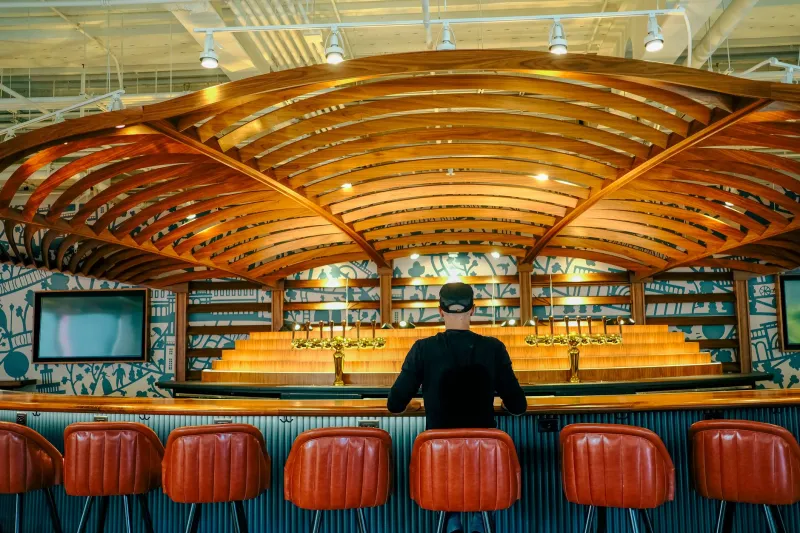
Somewhere between the third round of Casamigos and the Uber surge pricing home, the math stops working. It stopped working last weekend, too. And the weekend before that. But in the moment—under the neon glow of Old Town, with a DJ hammering bass frequencies into your chest cavity—the math feels like someone else's problem. A future-you problem. And future you, as it turns out, is absolutely furious.
Welcome to the Scottsdale comedown. Population: more than anyone's admitting.
The Scene That Sells You a Story
Scottsdale's nightlife doesn't just sell drinks. It sells an identity. The rooftop bars, the pool parties at Maya, the velvet ropes at Riot House—they're all peddling the same product: the feeling that you are, right now, exactly where you're supposed to be, living exactly the life worth living. It's a masterfully constructed illusion, and the people who build these venues know precisely what they're doing.
"The architecture of a high-end nightlife venue is designed to trigger status-seeking behavior," says Dr. Renee Callahan, a Phoenix-based licensed clinical psychologist who specializes in behavioral addiction. "Scarcity cues, social validation loops, ambient lighting that literally makes people look more attractive—it's not accidental. These are environments engineered for escalating spend and repeated return visits."
In other words, the house always wins. And in Scottsdale, the house is wearing a blazer with no undershirt and charging you $28 for a vodka soda.
The Tab That Follows You Home
Marcus T., a 31-year-old marketing consultant who asked us to use only his first name and last initial, did the accounting last spring. Not voluntarily. His bank did it for him, in the form of a declined card at a Filiberto's at 2 a.m.—a moment he describes as "the most clarifying experience of my adult life."
"I was spending somewhere between $800 and $1,500 every weekend," he says, with the calm of someone who has since made peace with genuinely insane information. "Bottle service, cover charges, Ubers, late-night food, sometimes hotel rooms because it was easier than going home. I told myself it was networking. I told myself it was my social life. It was neither. It was just a very expensive habit with a great playlist."
Financial advisor Krista Nguyen, who operates out of a Scottsdale practice and sees a disproportionate number of clients in their late twenties and thirties, says Marcus is not an outlier. Not even close.
"I have clients who came to me in credit card debt that was entirely nightlife-driven," she says. "Not medical emergencies, not housing crises—bars and restaurants. We're talking $20,000, $30,000 in revolving debt. And the really painful part is that there's nothing to show for it. At least a shopping addiction leaves you with shoes."
Nguyen now runs what she half-jokingly calls a "Saturday Night Audit" exercise with new clients: pull up every charge from the previous 90 days that occurred between 9 p.m. and 3 a.m. on a weekend. "Most people have never looked at it as one number," she says. "When they do, the room gets very quiet."
When the Weekend Becomes the Point
The financial damage is measurable. The psychological damage is sneakier.
"There's a specific kind of depression that sets in when your entire social identity is built around a scene that only exists in the dark," says Callahan. "Sunday becomes this existential wasteland. You're exhausted, you're dehydrated, you're possibly still drunk, and you have this creeping awareness that nothing you did last night actually mattered. And the fastest way to make that feeling go away is to start planning next Friday."
This loop—what addiction specialists sometimes call "euphoric recall"—is the engine that keeps people feeding the machine long after the fun has genuinely left the building. The brain edits the highlight reel. It remembers the moment the DJ dropped the song you love and forgets the $400 tab, the argument with your friend group, the 45-minute Uber wait in heels on Scottsdale Road.
Jamie Flores, who spent four years deep in Scottsdale's nightlife circuit before what she describes as a "soft bottom"—not a dramatic rock bottom, just a slow, grinding realization that she was miserable—puts it plainly: "I wasn't even having fun anymore. I was performing having fun. For Instagram, for the people around me, for some version of myself I was trying to convince was real. The party was happening, but I wasn't actually there."
Flores now volunteers with a Phoenix-area recovery support group that has seen a notable uptick in members who identify nightlife culture—not just alcohol—as their primary problem. "A lot of people don't think they qualify for a recovery conversation because they're not hitting what they picture as rock bottom," she says. "But if the weekend is running your life and you can't stop even when you want to, that's worth talking about."
The Exit Nobody Claps For
Here's what Scottsdale's nightlife machine will never tell you: the people who quietly walk away are often the sanest ones in the room. They don't get a farewell tour. There's no going-away party when you decide that $200 Saturdays and $2,000 Saturdays are both too expensive in ways that go beyond money. The scene just... continues without you, completely indifferent.
Marcus paid off his credit cards in fourteen months. He still goes out occasionally—"like a normal person," he says, with emphasis—but the compulsive weekend ritual is gone. He describes the first few months of stepping back as "genuinely disorienting," like returning to a city you used to live in. "I didn't know who I was if I wasn't going out," he admits. "Which, when I say it out loud, is a pretty alarming thing to realize about yourself."
Jamie found a therapist and a hiking group. Nguyen's clients, on average, redirect between $1,200 and $2,500 per month once they get honest about their nightlife spending—money that, she notes with dry precision, "turns out to be very useful for things like retirement accounts and not having a panic attack when your car needs new tires."
The Morning Is Still There
Scottsdale is genuinely, legitimately fun. The restaurants are excellent. The weather is absurd in the best way for about seven months a year. The nightlife, when you're in it intentionally rather than compulsively, can be a real good time. None of that is up for debate.
But the desert has a way of burning off the illusions eventually. The sun comes up hard here. The hangover hits different when it's already 85 degrees at 8 a.m. and your bank app is loading.
The party, as advertised, does not stop. But you can. And according to everyone who has—it's the most interesting thing that ever happened to them.
If you or someone you know is struggling with alcohol use or behavioral addiction, SAMHSA's National Helpline is available 24/7 at 1-800-662-4357. It's free, confidential, and they've heard everything.