Burning Daddy's Money in the Desert: The Spectacular Implosion of Scottsdale's Trust-Fund Nightlife Ventures
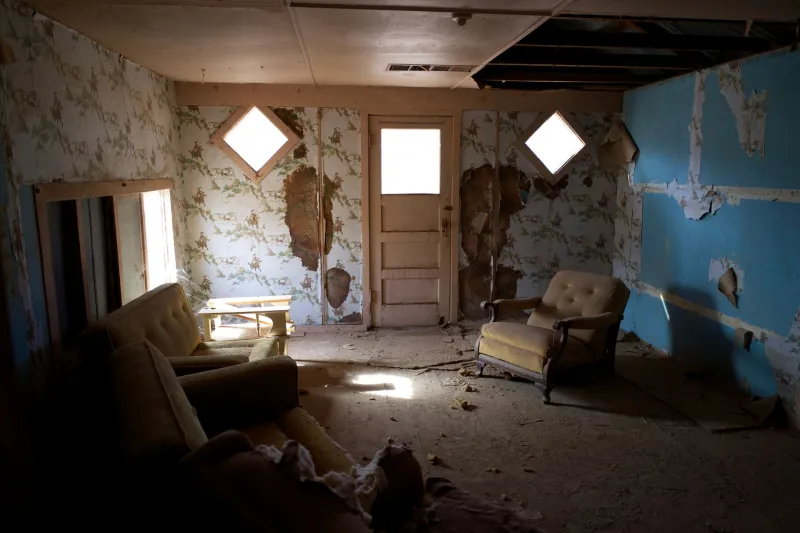
There is a specific kind of confidence that only comes from never having truly failed at anything. You can spot it immediately in Scottsdale — usually attached to a guy in a linen blazer, standing in the gutted shell of a former sushi restaurant on Scottsdale Road, describing to a contractor exactly how the "experiential bar concept" is going to "disrupt the Old Town market." He has a business plan. He has investors. He has a vision board, probably. What he does not have is any meaningful understanding of the city he just parachuted into.
Six months later, the place is closed. The Instagram account still exists, frozen in time like a digital Pompeii — a reel of the soft open, a carousel of cocktail photos, and then nothing. Just silence and a Google listing that says "permanently closed."
This is not a rare event. In Scottsdale, it is practically a seasonal tradition.
The Anatomy of a Doomed Launch
The blueprint is almost always identical, which is what makes it so darkly fascinating to watch. Step one: an out-of-towner — often from Austin, occasionally from Chicago, sometimes from some corner of California where they convinced themselves they understood "vibe" — decides Scottsdale is an untapped goldmine. And honestly, it's not a crazy read on paper. The city has money, tourism, a warm climate, and a population that genuinely likes going out. The bones are there.
Step two: they lease a space that is aggressively too large for an unproven concept, because bigger feels like a flex and nobody ever made a statement with a 2,000-square-foot room. We're talking 8,000 square feet minimum. Maybe a rooftop. Definitely a DJ booth that cost more than most people's cars.
Step three: they spend somewhere between $400,000 and $1.2 million on buildout, custom furniture, and a lighting system that requires its own IT consultant. The cocktail menu gets designed by someone who flew in from New York specifically for that purpose. There is a "signature experience" that involves either fire, fog machines, or a resident artist painting on a canvas in the corner.
Step four: they open to a packed house on a Friday night, mostly comprised of people they personally invited and comped. The photos look incredible. The energy is electric. Everyone is certain this is the next big thing.
Step five: the following Tuesday, the place is a ghost town. And it never really recovers.
What They Got Wrong (Pretty Much Everything)
We talked to several former operators — names withheld, because honestly, some of these guys are still licking their wounds — and the post-mortems were remarkably consistent.
"I thought Scottsdale was Vegas-adjacent," admitted one guy who burned through roughly $800,000 on a cocktail lounge concept that lasted eleven months. "I kept comparing it to the Strip. But Vegas has 40 million tourists a year who are explicitly there to spend money irresponsibly. Scottsdale's crowd is local-heavy, and locals have opinions. They have loyalty to places they already love. You can't just show up and expect them to transfer that loyalty to you because your bathrooms are cool."
That's the first mistake: confusing Scottsdale's tourist energy — which is very real, particularly during spring training and snowbird season — with a sustainable, year-round customer base. The tourists come, they spend, and they leave. What's left is a local market that is deeply tribal, surprisingly discerning, and not particularly interested in giving a new venue the benefit of the doubt.
The second mistake is underestimating the summer. Almost every failed operator we spoke to mentioned it. Scottsdale in July is not the same city as Scottsdale in February. The population contracts. The tourists evaporate. The people who remain are not going out five nights a week — they're surviving. If your business model requires consistent high-volume foot traffic twelve months a year, you are going to run the math wrong. Badly.
"My burn rate was designed for a city that doesn't hibernate," said another former operator, who launched what he described as a "Mediterranean social club" concept in 2022. "I had modeled revenue on Q1 numbers. Q3 almost killed me. Q4 didn't save me in time."
The Tech Bro Special
Somewhere in the last five years, a specific subspecies of failed operator emerged: the recently-liquidated tech entrepreneur who decided that nightlife was the logical next chapter. They've had an exit — maybe modest, maybe significant — and they want to do something "creative" with the capital. Restaurants and bars feel tangible in a way that software never did. You can touch the bar top. You can watch people enjoy the thing you built in real time.
What they bring to the table is an obsession with systems, metrics, and scalability that is genuinely useful in about 15% of the decisions involved in running a nightlife venue, and actively counterproductive in the other 85%. Scottsdale nightlife runs on relationships, reputation, and a kind of social intuition that doesn't have a dashboard. You can't A/B test your way into being the place that the right promoter wants to bring their crowd on a Saturday. You either have the juice or you don't.
"I kept trying to optimize," one tech-turned-hospitality guy told us, with the exhausted clarity of a man who has recently finished therapy about it. "I was tracking cover conversion rates and average ticket time. None of that mattered because we never cracked the social hierarchy. We were never the place. We were always the place people went when their first choice had a line."
The Venues That Actually Survive
Here's the uncomfortable truth that none of the pitch decks ever account for: the venues that endure in Scottsdale are almost never the ones with the biggest budgets or the most elaborate concepts. They're the ones with operators who either grew up here, spent years learning the market from the inside, or had the humility to hire people who did.
The locals who make it aren't reinventing anything. They're executing fundamentals — consistent service, smart programming, genuine relationships with the regulars — with a level of care that no amount of imported concept design can replicate. The room can be unremarkable. The cocktail list can be straightforward. If people feel like they belong there, they'll come back. And they'll bring their friends.
That is, apparently, a very difficult thing to learn from a pitch deck.
The Cycle Continues
None of this is going to stop the next guy from showing up. Right now, somewhere, there is a person in a co-working space running projections on a Scottsdale nightlife concept that he is absolutely certain is different. He's found a space. He's got a vision. He's already picked out the font for the signage.
We genuinely wish him luck. We also already know how this ends.
Scottsdale is not a city that punishes ambition. It punishes arrogance dressed up as ambition. It punishes the assumption that money is a substitute for understanding. And it punishes, with particular efficiency, anyone who mistakes a great opening weekend for a sustainable business.
The desert is patient. It has seen a lot of linen blazers come and go. It will see plenty more.