Gone by Monday: The Real Reasons Scottsdale's Hottest Venues Vanish Overnight
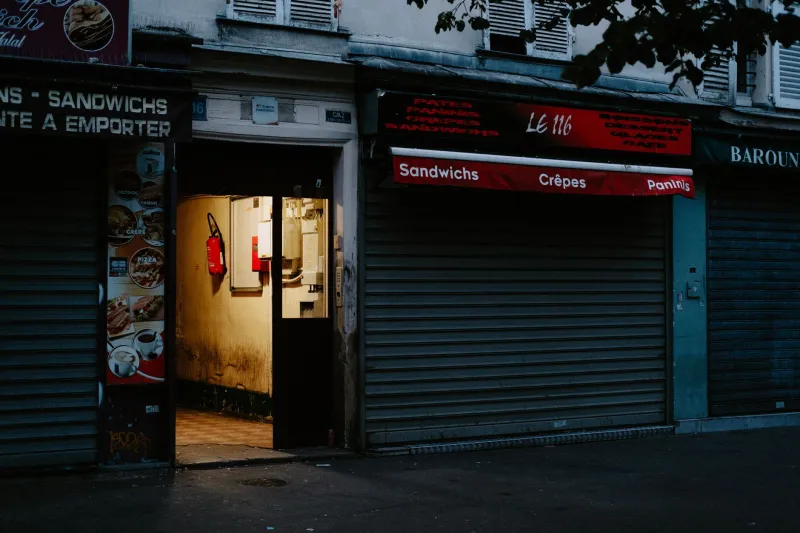
You've been there. You find a spot, you tell your friends about it, you go back three times and start thinking of it as your place. Then one random Wednesday you drive by and the windows are papered over. The Instagram account posts something cryptic about being "grateful for the journey." The Google listing says "permanently closed." And just like that, another piece of Scottsdale's nightlife landscape gets quietly composted into the city's collective memory.
This happens constantly here. More than people realize, and almost always for reasons that have nothing to do with what management tells you on the way out.
The Official Story Is Almost Never the Real Story
Venues close for all kinds of reasons, and the public-facing explanation—"we've decided to pursue exciting new opportunities"—is basically the nightlife equivalent of "it's not you, it's me." Technically a sentence, completely uninformative.
The actual causes tend to cluster around a handful of recurring disasters. Lease negotiations gone sideways. Silent investors who got loud. A liquor license violation that didn't make the news but absolutely made the rounds. A partnership that looked great on paper until two people who genuinely cannot stand each other started spending 80 hours a week in the same building.
Scottsdale's commercial real estate market is its own special category of chaos. Landlords in Old Town and the 101 corridor know exactly what they have—high-traffic, high-visibility real estate in a city where nightlife is a major economic driver—and they price accordingly. A venue can be genuinely packed every weekend and still be hemorrhaging money because the rent-to-revenue math never penciled out in the first place. Some of these spots open already underwater and spend their entire existence trying to swim fast enough to stay afloat.
Spoiler: a lot of them don't make it.
The Ownership Shuffle Nobody Talks About
Here's a thing that happens in Scottsdale more than anywhere has a right to: a venue closes, sits dark for four to six months, then reopens under a completely different name with a completely different concept—but the same ownership group running the whole thing from behind a new LLC.
This isn't always shady. Sometimes it's just a pivot. The sushi and bottle service concept didn't work, so now it's a craft cocktail bar with exposed brick. Fine. But sometimes the name change is doing a lot of legal and reputational heavy lifting, and the regulars who loved the old spot have no idea they're walking back into the same operation that burned them before.
The hospitality world in Scottsdale is genuinely small. The same investors, the same general managers, the same PR firms, and the same liquor reps cycle through what looks like a constantly refreshing roster of venues but is sometimes just the same people rearranging furniture under different signage. If you want to know who actually runs a new spot, skip the press release and ask the bartender who they worked for before.
What Closures Actually Signal
Not every closure means the same thing. In Scottsdale's nightlife ecosystem, how a venue closes tells you almost as much as how it opened.
A sudden, no-warning shutdown—lights off, phones disconnected, staff blindsided—usually points to something financial and acute. A lease that ended badly, a debt that came due, a bank that stopped being patient. These closures tend to happen mid-week, mid-season, and they leave a lot of unpaid staff in their wake.
A slow fade is different. The hours start getting weird. The specials get more aggressive. The social media posts drop from daily to twice a week to once a month. The crowd thins out on nights that used to be packed. This is a venue dying on its feet, and everyone in the industry can see it happening before the sign goes up. By the time they post the goodbye, the scene has already moved on.
And then there's the prestige closure—the spot that shuts down at the height of its popularity, leaving people genuinely confused and a little bereft. These are rare, but they happen. Sometimes it's a lease that truly couldn't be renewed. Sometimes a key person walks and the whole thing becomes impossible without them. These closures create the most potent mythology, which is probably why the venues that pull them off tend to resurface somewhere else with an enormous amount of built-in goodwill.
Where the Scene Goes When the Lights Go Out
This is the part nobody puts in a press release, but it's the most interesting part: scenes don't die when venues close. They migrate.
When a major Old Town spot folds, its regulars don't just go home and start watching TV. They go somewhere. And that somewhere is almost always a place that wasn't on anyone's radar six months ago—a smaller room, a less obvious address, a bar that's been quietly doing its thing without the hype infrastructure.
Right now, the drift is noticeable. There's genuine energy moving toward spots in the Scottsdale Road corridor that don't have velvet ropes or Instagram-bait decor. Places where the bartenders actually know what they're doing and the crowd is there because they want to be, not because a sponsored post told them to be. The kind of rooms that don't show up in "Best of Scottsdale" roundups because they haven't hired a PR firm yet.
There's also a quieter migration happening toward private events and semi-public gatherings—the Scottsdale equivalent of a speakeasy, minus the theatrical password situation. When the public-facing venues get too expensive, too crowded, or too exhausting, the people who actually drive the scene start building their own alternatives. These move by word of mouth, they're gone before they can be reviewed, and they're almost always more fun than anything with a marquee.
The Upside of the Revolving Door
For all the carnage, there's something that works about Scottsdale's willingness to let venues die. Cities that protect their institutions at all costs end up with scenes that calcify—the same spots, the same crowds, the same energy, year after year, slowly going stale.
Scottsdale doesn't have that problem. The turnover is brutal, but it keeps the floor clear for something new. Every closure is technically an opening. Every vacated space is an opportunity for someone with a better idea, or at least a different one.
The trick is knowing which closures to mourn and which ones to treat as directions. When the right spot closes, it usually means the scene has already figured out where it's going next. Your job is just to follow it before it becomes the next place everyone's talking about—and the whole exhausting cycle starts again.