Namaste and Tequila: The Magnificent Hypocrisy of Scottsdale's Wellness-Party Industrial Complex
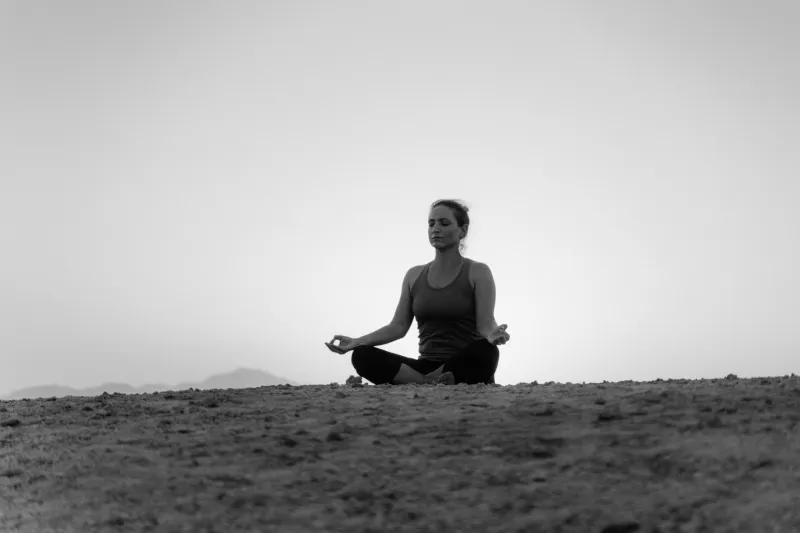
Sarah — not her real name, but absolutely her vibe — wakes up at 5:47 AM on a Saturday. She has a 6:15 infrared sauna session followed by a 7:30 hot yoga class at a studio that smells like eucalyptus and ambition. By 9 AM she's posting a post-workout smoothie bowl to her Instagram story with the caption "fueling right 🌿" and tagging the organic café that charged her $17 for it.
By midnight she is taking a shot of Patrón off a serving tray while a DJ plays a remix of a song she doesn't recognize at a volume that will cause measurable hearing damage over time.
Both of these things are true. Neither of them is ironic. This is just Tuesday in Scottsdale, except on Tuesdays it's mezcal.
The Wellness Arms Race
Scottsdale has become, quietly and without anyone formally declaring it, one of the premier wellness cities in the country. The concentration of yoga studios, IV drip bars, float tanks, cryotherapy chambers, functional medicine practices, and juice bars per capita would impress a health reporter from a major coastal publication. People here talk about their supplement stacks the way people in other cities talk about their Netflix queues.
This is not a coincidence. Scottsdale's wellness industry grew in direct proportion to its nightlife industry, and the customer overlap is almost total. The same person doing a $180 IV hydration drip on Sunday morning was the one who made the IV drip necessary on Saturday night. The detox exists to service the retox. They are not opposites — they are a subscription model.
The businesses understand this completely. Several IV therapy lounges in the Valley market explicitly to the post-nightlife demographic, with names and branding that make no effort to pretend they're serving marathon runners. One popular spot in Old Town has weekend hours that begin at 9 AM and peak around noon — precisely when the previous night's damage is making itself most aggressively known.
Wellness as Social Currency
Here's the thing about Scottsdale's wellness culture that distinguishes it from, say, Portland's or Austin's: it functions primarily as social currency rather than as an actual health practice.
This is a meaningful distinction. When someone in Scottsdale tells you they've been doing intermittent fasting, the correct response is not to ask about their metabolic markers. The correct response is to express interest and possibly ask which protocol, because this is the beginning of a conversation that will establish both parties' positions in a loosely defined hierarchy of self-optimization.
The same dynamic applies to cold plunges, breathwork, peptide therapy, and whatever biohacking trend arrived in the Valley approximately six weeks after it appeared on a Joe Rogan episode. These practices are real. Some of them have genuine physiological benefits. But in Scottsdale's social ecosystem, they function mostly as talking points — a vocabulary of self-improvement that signals a certain kind of person without requiring that person to have meaningfully changed their behavior.
You can be deeply committed to your morning routine and deeply committed to your Saturday night. Scottsdale has decided these are not in conflict. The morning routine is just the prologue to the evening, and the evening is just the reason the morning routine exists.
The Tulum-to-Tequila Pipeline
Nothing illustrates this better than the Scottsdale interpretation of "clean living." Clean eating here means avocado toast and grain bowls from upscale fast casual spots with exposed brick and pendant lighting. It does not mean not drinking. Alcohol has been quietly exempted from the clean living framework, particularly if it's organic wine, craft tequila, or anything described as "low ABV" even when it empirically is not.
The food and beverage industry in Scottsdale has been spectacularly successful at repositioning alcohol as compatible with wellness. Farm-to-table cocktail menus with house-made shrubs and locally sourced botanicals are not really different from a vodka soda in terms of what they do to your liver, but they feel different. They feel like a choice made by someone who is conscious of what they put in their body. Which is the point.
Restaurants in the dining corridor have mastered this fusion. You can order a $28 entrée with a full nutritional breakdown on the menu and pair it with a $16 cocktail made with adaptogen-infused spirits, and the entire experience will feel curated and intentional rather than contradictory. The menu is doing a lot of work to make you feel like the same person who made it to hot yoga is the same person ordering the third round.
Guilt-Free by Design
What Scottsdale has actually invented — and it deserves some credit for the engineering here — is a lifestyle architecture that eliminates guilt as a friction point.
In previous generations, excess required some degree of moral reckoning. You partied, you felt bad about it, you either moderated or didn't. The feeling bad was part of the deal. Scottsdale's wellness-hedonism hybrid has surgically removed that step. The cleanse after the bender isn't penance — it's just the next item on the wellness calendar. The 6 AM yoga class after a 2 AM close isn't suffering — it's "balance."
Balance is the operative word. It comes up constantly in conversations with people embedded in the scene, and it functions as a universal absolution. Are you drinking four nights a week? Balanced. Are you spending $400 on a Saturday night and $200 on Sunday recovery treatments? Balanced. Are you doing cryotherapy to counteract the inflammation from the alcohol that caused the inflammation that made the cryotherapy necessary? Absolutely, beautifully, expensively balanced.
What It's Actually Costing
The wellness industry in Scottsdale is not cheap, and when you add it to the nightlife tab, the numbers become genuinely impressive. A serious wellness participant — someone doing two to three classes a week, monthly IV therapy, occasional float sessions, and a quarterly cleanse — is spending $400–$800 a month on optimization before they've bought a single drink.
The combined annual spend for someone living the full Scottsdale wellness-hedonism lifestyle — the yoga, the cocktails, the supplements, the rooftop tables, the Sunday recovery brunches — can exceed $20,000 without anyone involved feeling like they're being excessive. Because none of it, individually, feels excessive. It just feels like living well.
Which, to be fair, is exactly what it looks like.
The View From Outside the Infrared Sauna
None of this is a moral judgment. People are allowed to do hot yoga and drink tequila. They are allowed to spend money on both. The lifestyle is coherent on its own terms, and Scottsdale has built an impressively seamless infrastructure to support it.
But there is something worth naming in the fact that an entire city has collectively agreed that the best response to a culture of excess is more consumption — just consumption that comes with a wellness brand attached. The answer to too much is not less. It's a better recovery protocol.
Somewhere, a very attractive person is rolling out a yoga mat in a studio that smells like palo santo, mentally planning their Saturday night outfit.
They are, by any reasonable definition, thriving.
And they have absolutely no idea how much it's all costing them.