All Surface, No Substance: The Performance Art That Scottsdale Calls a Social Life
All Surface, No Substance: The Performance Art That Scottsdale Called a Social Life
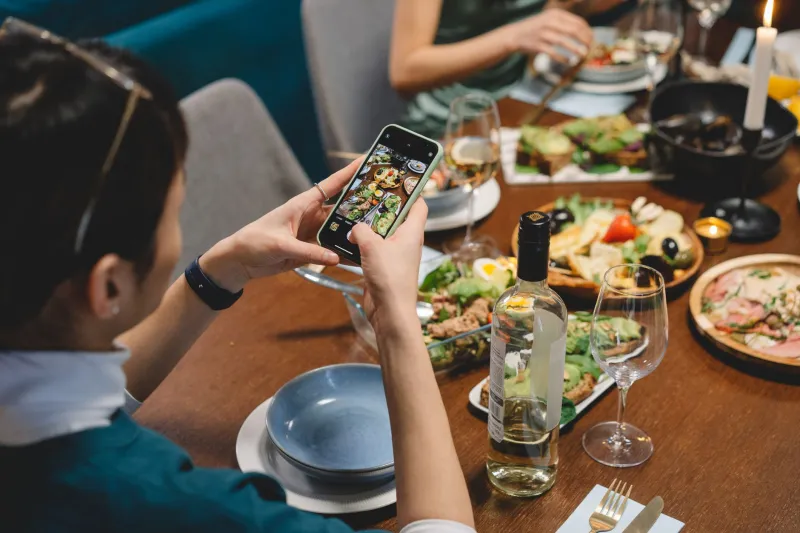
There is a particular kind of photo that gets taken approximately four thousand times every weekend in Scottsdale. You know the one. Four people at a restaurant table, golden-hour lighting, charcuterie board artfully disheveled in the foreground, champagne flutes raised at the exact angle that photographs best. Everyone is laughing at something that definitely happened organically and was not staged, retaken, or filtered into a version of warmth that the actual evening never contained.
The food in that photo is getting cold. Nobody cares.
This is Scottsdale's social contract in a single frame: the documentation of the experience has become more valuable than the experience itself, and somewhere along the way, the city stopped noticing the swap.
The Persona Economy
Scottsdale runs on a currency that predates crypto and outlasts any stock market fluctuation: the carefully constructed personal brand. And unlike other cities where identity gets built gradually through work, relationships, or genuine weirdness, here it tends to arrive fully assembled — the aesthetic, the friend group, the regular table at the right restaurant, the casual mention of the right gym.
This isn't unique to Scottsdale, obviously. Los Angeles has been doing it longer and Miami does it louder. But there's something specific to this particular desert city that makes the performance feel especially heightened. Maybe it's the sunshine, which is relentless and unforgiving and makes everything visible. Maybe it's the transient population — a city full of people who relocated for a fresh start and decided to start fresh as someone slightly more interesting than who they actually were.
Or maybe it's the geography. When your city is built around luxury resort culture, when hospitality is literally the industry, you start to absorb the logic: presentation is the product. The guest experience is the point. And everyone becomes both the hotel and the guest simultaneously, performing for each other in an infinite loop of mutual audience.
The Strategic Friend Group: Casting Your Social Circle Like a TV Pilot
Spend enough time watching how Scottsdale's social scene actually operates and you start to notice that friend groups here are less organic formations and more deliberate ensembles. There's the attractive one, the connected one, the one who always knows the promoter, the one with the nice car, and the wildcard who exists to make everyone else look comparatively stable.
This isn't cynical — or rather, it's no more cynical than acknowledging that LinkedIn exists. People have always curated their social proximity to people who benefit them. Scottsdale just does it with better lighting and a more consistent aesthetic.
The tell is what happens when the utility runs out. Friendships in cities with deeper roots tend to survive inconvenience — someone moves to a different neighborhood, changes jobs, gains weight, stops going out. In Scottsdale's performative social ecosystem, the friendship often doesn't survive the rebrand. When someone exits the scene, voluntarily or otherwise, the group photo gets quietly updated and the gap closes without ceremony.
It's not cruel, exactly. It's just honest about what those relationships were built on.
The Restaurant as Set Piece
Dining in Scottsdale has developed a fascinating dual identity. On one level, the food scene is genuinely extraordinary — serious chefs, innovative menus, farm-to-table sourcing that predates the trend and continues to outperform it. The culinary talent here is real and it deserves its own separate conversation entirely.
But the restaurant as a social institution? That's where it gets complicated.
The hottest reservations in Scottsdale function less as access to a meal and more as access to a backdrop. The right table at the right restaurant on the right night is a location scout's dream — ambient lighting calibrated to flatter human skin tones, interior design that photographs as aspirational without trying, staff trained to be present without being visible. It is, in the most literal sense, a stage set. And the diners are the show.
Chefs who have watched this dynamic evolve over the past decade describe a particular kind of customer who orders based on what photographs well rather than what tastes good. Dishes that don't perform on a phone screen get quietly retired. Presentations get adjusted not for the diner's pleasure but for the diner's feed. The menu becomes a content strategy.
Nobody ordered the steak because they wanted steak. They ordered it because it comes out on a wooden board.
The Cost of the Filter
Here's where it stops being funny and starts being something else: the relentless performance of a life that is slightly better than the one you're actually living is exhausting in ways that compound slowly and reveal themselves all at once.
The anxiety of maintaining a curated identity in a city full of other people maintaining curated identities is a particular kind of psychological tax. You're not just managing your own performance — you're constantly auditing everyone else's and measuring yourself against a standard that literally nobody in the room is actually meeting. It's a competition with no winners and no finish line, held inside a venue with a two-drink minimum.
Therapists in Scottsdale — and there are many, which is its own data point — describe a consistent pattern among clients who are deeply embedded in the social scene: a creeping sense of invisibility despite constant visibility, a loneliness that coexists with a packed social calendar, an inability to distinguish between genuine connection and transactional proximity.
The filter costs you the ability to be seen. Which is darkly ironic for a city that has built an entire culture around being looked at.
What the Performance Actually Says About Us
Scottsdale didn't invent social performance and it won't be the last city to perfect it. But it has become an unusually pure expression of what happens when aspiration meets abundance meets the infinite scroll — a place where the gap between who you are and who you're presenting yourself as gets wide enough to fall into.
The people caught in it aren't villains. They're just participants in a system that rewards the mask more consistently than it rewards the face underneath. And systems shape behavior. Always have.
The good news — and there is good news — is that the cracks are starting to show, and not just in the filtered photos. There's a growing contingent of Scottsdale regulars who are visibly, deliberately opting out of the theater. The dive bar at stop four of the night is full of them. They're drinking cheap beer, they've put their phones away, and they're laughing at something that actually happened.
The food is still getting cold at the table across town. But at least someone, somewhere, is actually tasting theirs.