Staged Candid: How Scottsdale's Venues Are Quietly Turning You Into Unpaid Marketing Staff
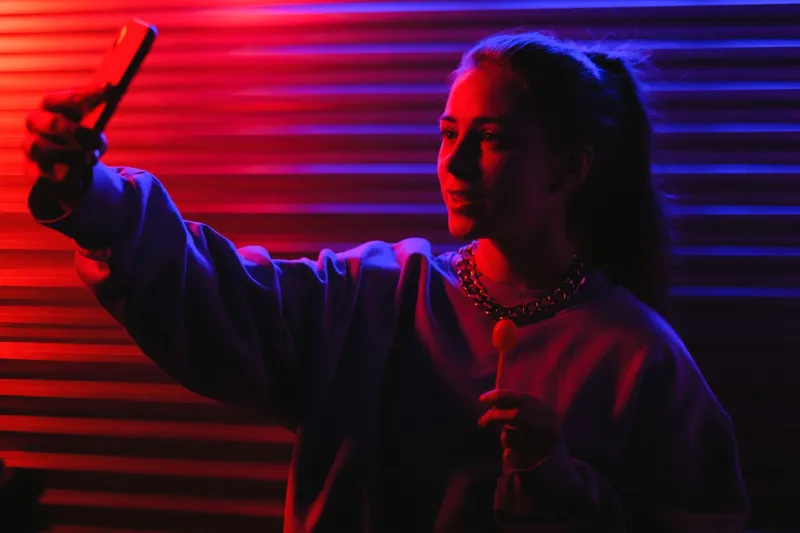
Let's start with the flower wall.
You know the one. Every Scottsdale venue worth its $22 espresso martini has one — an explosion of artificial blooms, perfectly lit, positioned at exactly the right height for a girl in a bodycon dress to press her shoulder against and tilt her chin at a 37-degree angle. It looks effortless. It is the opposite of effortless. That wall was designed by someone with a graphic design degree, installed by a crew of three, and A/B tested against two other color palettes before opening weekend.
You are not taking a spontaneous photo. You are completing a marketing funnel.
The Architecture of the 'Accidental' Shot
Scottsdale's most Instagrammable venues don't stumble into virality. They engineer it with the same cold precision a pharmaceutical company uses to design a pill that's slightly too easy to keep taking. Lighting rigs are positioned not to flatter the room, but to flatter the camera. Neon signs aren't décor — they're captions. The signature drink arrives in a vessel so absurd that putting it down without photographing it first would feel like a moral failing.
Restaurant and nightlife consultants — yes, this is an actual profession that is thriving in the Valley — now advise owners on what they call "content triggers." These are specific design elements, presentation choices, and spatial arrangements that reliably cause guests to reach for their phones. A dessert that arrives on fire. A cocktail served in a bird cage. A bathroom mirror with ring lights so flattering you'll spend eleven minutes in there and exit with seventeen new selfies.
None of it is accidental. All of it is yours to post for free.
The Influencer Industrial Complex, Scottsdale Edition
At the top of this pyramid sit the influencers — a loosely organized class of attractive people with Ring lights and negotiated comp tabs who exist specifically to make normal attendees feel like they've accidentally wandered into someone else's highlight reel.
Here's how the machine actually works: A venue opens, pays three to five mid-tier influencers (10K to 80K followers, local enough to feel relatable) in free bottles and exposure to attend opening weekend. Those influencers post. Their followers, who are mostly other Scottsdale residents, see the content and experience a very specific, very manufactured emotion — not quite jealousy, not quite inspiration, something in the uncomfortable overlap. They book a table. They arrive dressed for content. They post. The cycle continues with zero additional marketing spend from the venue.
You are the marketing budget. You just don't have a line item.
What FOMO Actually Costs in Scottsdale
The psychological mechanism underneath all of this is embarrassingly well-understood by the people deploying it. Scottsdale's social scene runs almost entirely on comparative anxiety — the nagging suspicion that everyone else is having a more photogenic Saturday night than you are.
Venues actively cultivate this. Exclusive preview events with curated guest lists aren't just about generating buzz — they're about creating a documented record that some people were there and you weren't. The velvet rope isn't a crowd control mechanism. It's a content prop. The people inside look more desirable because there are people outside who can't get in. Everyone understands this. No one says it out loud.
Social media strategists working with Scottsdale hospitality groups will openly tell you — off the record, always off the record — that the goal isn't to make guests feel good. The goal is to make guests feel seen, which is a completely different thing and, critically, requires an audience.
The Validation Loop You Didn't Agree To
Here's where it gets a little uncomfortable. The reason this works isn't because Scottsdale's nightlife crowd is uniquely shallow or uniquely vain. It's because the infrastructure has been deliberately built to reward a very specific behavior: public performance of a good time.
Post a photo at the right venue, tag correctly, and you get likes, comments, new followers, maybe a DM from someone who wants to know where you went. Your brain registers this as social approval. You associate the venue with that approval. You go back. You post again. The venue gets another round of free content. A neuroscientist would call this a reinforcement schedule. A nightlife consultant would call it a successful opening weekend.
What you'd call it, at 2 AM when you're uploading your fourteenth photo and checking the like count every four minutes, is probably something you'd rather not examine too closely.
How to Exist in the Machine Without Getting Eaten
None of this means you should stop going out. It means you should go out with your eyes open and your self-worth somewhere that isn't tied to the engagement rate on a photo you took next to a neon sign that says "Cheers, B*tches."
The flower wall will be there whether you photograph it or not. The cocktail will taste the same whether you post it or not. And the venue will survive without your organic reach — though it would very much prefer you provide it.
Scottsdale nightlife is genuinely fun. It's also genuinely a content operation that has identified young professionals' need for social validation as a renewable resource.
You can enjoy the party. Just know who built the room you're standing in, and why they made sure the lighting hits your cheekbones just right.
They didn't do it for you.