Bottle Math: The Brutal Economics Behind Scottsdale's VIP Hustle
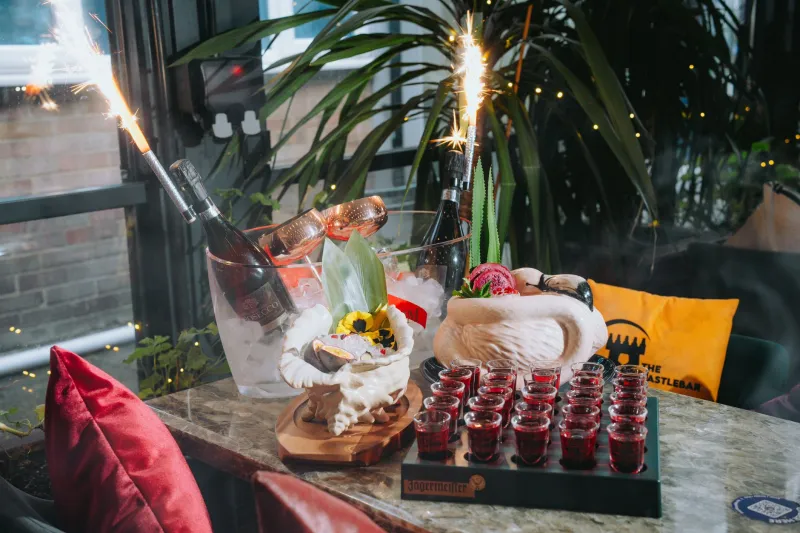
Let's start with a number: $600. That's a common entry-level bottle service minimum at a mid-tier Scottsdale nightclub on a Saturday. For that $600 you receive: one bottle of spirits that retails for approximately $35 at Total Wine, a bucket of ice, four mixers that cost the venue about $2 total, a small table in a roped-off section, and the psychological experience of feeling like you matter more than the people standing eight feet away from you.
Is it worth it? That depends entirely on what you think you're buying. And most people, it turns out, have no idea what they're actually buying.
The Markup Is the Product
Here's the first thing you need to understand about Scottsdale's VIP economy: the markup on the bottle is not incidental. It IS the product. You are not paying for vodka. You are paying for a social signal — a visible, quantifiable declaration that you have the resources to spend $600 on something that costs $35.
The bottle, the sparkler parade, the server in a sequined outfit carrying the thing to your table while a spotlight tracks the journey — all of it is theater designed to make other people in the venue notice that you spent money. The experience is engineered to be witnessed, not consumed.
"People don't buy tables because they're thirsty," says one former promoter who spent four years working the Scottsdale circuit and asked to remain anonymous. "They buy tables because they want to be seen buying tables. The alcohol is almost irrelevant. We're selling status, and status is a very easy thing to mark up."
The math on that markup is genuinely staggering. A $35 retail bottle becomes a $400–$800 menu item. That's a markup of 1,000–2,000 percent. For context, a restaurant doing a 300% markup on wine is considered aggressive. The VIP nightclub industry treats 1,500% as standard operating procedure and calls it luxury.
Breaking Down the $600 Minimum
Where does the money actually go? We pieced together the economics from multiple sources — servers, promoters, and venue managers who were willing to talk off the record.
The bottle itself: Roughly $35–$60 cost to the venue, depending on the brand and their purchasing volume. They're buying in bulk. The cost is lower than you'd pay at retail.
The table: The physical space you're occupying has a dollar value assigned to it based on location in the room, sight lines to the DJ, and general prestige. Prime tables at top venues can generate $3,000–$8,000 in a single night. The "table" itself is a revenue center, and your minimum is your rent.
The staff: Your server and the support staff around you are working for tips that are typically expected to be 20–25% on top of the bill. On a $600 tab, that's $120–$150. The sparkler ceremony, the personalized service, the bottle presentation — all of it is tip-generation theater.
The venue overhead: Security, lighting, sound, DJ fees, insurance, rent on a Scottsdale Road property — these are real costs, and they're substantial. A Friday night DJ can run $5,000–$15,000. That cost gets distributed across every table in the room.
After all of that, the venue's actual margin on your $600 is healthy but not obscene — roughly 60–70%. What's obscene is how much of the transaction is psychological rather than material.
The Manipulation Playbook
Scottsdale's VIP industry didn't invent psychological pricing, but it has refined a specific set of tactics worth understanding before you hand over your credit card.
The Scarcity Pitch: "We only have two tables left for Saturday." This is almost always false. Table inventory is managed dynamically and real scarcity is rare. The scarcity pitch is designed to trigger a purchase decision before you have time to do the math.
The Anchor: The promoter tells you about a $1,200 minimum first, then offers you the $600 option as a "deal." You feel like you've saved money. You have not saved money. You have spent $600.
The Social Proof Stack: Your server mentions, casually, that the table next to you is a group celebrating a big deal, that the table in the corner is a well-known athlete, that last weekend a famous DJ sat exactly where you're sitting. All of this is designed to make you feel like you've entered a circle of significance.
The Upgrade Escalation: Once you're seated, the upsell begins. A second bottle. A premium pour upgrade. A "special" champagne for the birthday. Each ask is small relative to what you've already spent. This is the sunk-cost principle deployed with surgical precision.
What the Savvy People Actually Do
Here's the insider knowledge that the promoters would prefer you didn't have.
Negotiate the minimum, not the price. Venues will often lower the minimum on slower nights or for groups that commit early. The list price is not the final price. Everything is negotiable before you sit down.
Go on a Thursday. The experience is nearly identical to Saturday, the crowd is thinner, and the minimums are often 30–40% lower. You get the theater without the full ticket price.
Know your bottle math. Before you agree to anything, calculate how many drinks the table will actually consume. If six people are splitting a $600 minimum and each drinking three drinks, that's $33 per drink. At that point you're paying roughly what you'd pay for premium cocktails at the bar — except you're also getting a seat and the sparkler show.
Tip the server well and tip them early. The quality of your VIP experience is almost entirely determined by how your server treats you, and how your server treats you is almost entirely determined by whether they think you're going to tip generously. Front-loading a $50 tip at the start of the night will pay dividends.
Is Any of It Worth It?
Honestly? Sometimes. If you're celebrating something real, if you're with a group that will actually use the table, if you've negotiated a reasonable minimum and you go in with clear eyes about what you're purchasing — the VIP experience can be genuinely fun. The theater is real even when the economics are absurd.
But if you're doing it because you feel like you're supposed to, because the door guy made you feel like the alternative was standing in the back like a civilian, because you want to impress someone who's going to be unimpressed regardless — then you're not buying a VIP experience. You're buying a very expensive lesson in how Scottsdale makes its money.
The sparkler is pretty, though. We'll give them that.