Nobody Home: The AI Ghosts Running Scottsdale's Influencer Scene While Real People Watch
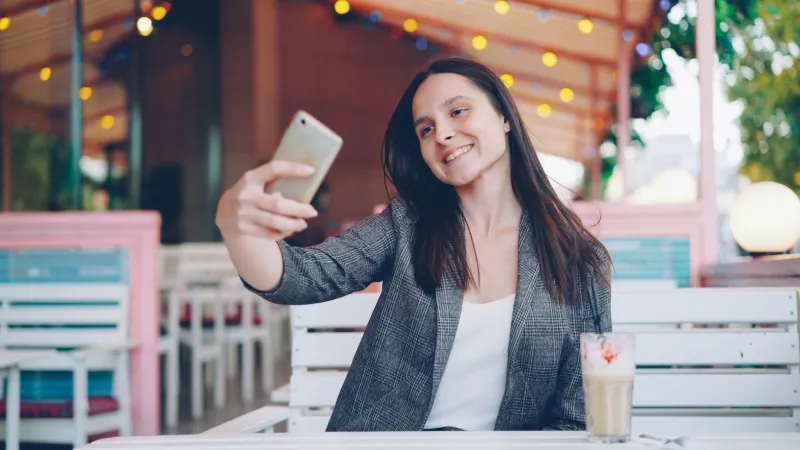
She has 47,000 followers. Her aesthetic is immaculate — golden hour skin, effortless poolside content, cocktails that catch the light in ways that feel almost too cinematic. She's tagged at every major Scottsdale venue that matters this season, her engagement rate is suspiciously healthy, and her DMs are, according to her bio, "open for collabs."
She also doesn't exist.
Welcome to the next evolution of Scottsdale's content economy, where the influencer you're double-tapping might be a composite of stock photography, generative AI, and a brand strategy deck assembled by someone who decided that a real human was too unpredictable and too expensive.
The Scene Behind the Scene
Scottsdale's nightlife has always run on image. Not just literally — though the city does have a per-capita ring light density that probably qualifies as a public health concern — but conceptually. The venue matters less than what the venue looks like on a phone screen. The drink matters less than what it looks like in a hand with good lighting.
For years, that image-making was outsourced to a loosely organized army of local influencers: real people with real followings who traded content for comped tables, free bottles, and the social currency of being seen in the right rooms. It was transactional, occasionally embarrassing, and thoroughly human.
That arrangement is quietly fracturing. Not collapsing — the human influencer isn't dead yet, not by a long shot — but being supplemented, in ways both obvious and invisible, by synthetic alternatives that venues and brands find more controllable, more consistent, and considerably cheaper.
"A real influencer might post something off-brand. They might show up and have a bad night and say so," explained one digital marketing consultant who works with several Scottsdale hospitality clients and requested anonymity because, as she put it, "I'm still billing these people." "An AI persona posts exactly what you need, when you need it, and never tags the wrong venue in a story."
How It Actually Works
The mechanics vary depending on budget and ambition. At the low end, you have venues flooding their own accounts with AI-generated caption writing and scheduling tools that produce content with the rhythm and vocabulary of a real person but the soul of a terms-and-conditions document.
Step up a level and you get AI-assisted image generation — real venue photography blended with generated lifestyle imagery to create content that looks like it was shot during a real event but was actually assembled from components at 2 a.m. by a marketing coordinator with a Midjourney subscription.
At the high end — and yes, this is happening in Scottsdale — you get fully constructed synthetic personas. Fake people with generated faces, curated backstories, consistent aesthetics, and posting schedules maintained by a combination of AI tools and human operators who manage the account like a character in an ongoing story.
These personas are then fed into the venue's promotional ecosystem: tagged in posts, mentioned in stories, invited to "exclusive events" that generate content proving the venue attracts the right kind of crowd. The followers scrolling past rarely notice. The algorithm absolutely doesn't care.
The Real Creators Are Noticing, Though
Amanda, 29, has been doing Scottsdale lifestyle content for four years. She's built a following of around 28,000 through what she describes as "genuinely showing up and genuinely spending money I probably shouldn't have."
"I started noticing accounts that felt off," she said. "Perfect content. No bad angles. Comments that were all some variation of 'love this' with no specificity. And then you'd see them tagged at venues I know personally, and I'd be like — I was there that night. I didn't see this person."
She reached out to one such account directly. "The response came back in about four seconds. It was warm, it was grammatically perfect, and it answered a question I didn't ask. I knew immediately."
Her concern isn't philosophical — it's economic. "If a venue can generate fake social proof for free, why are they paying me? And if they're not paying creators, what happens to the actual content ecosystem?"
It's a fair question, and the answer is probably uncomfortable.
What Venues Actually Think
Venue operators, when pressed, tend to frame AI content tools as efficiency plays rather than deceptions. "We're not trying to trick anyone," said one marketing director at a mid-size Old Town lounge who agreed to speak generally about industry practices. "We're trying to stay visible in an algorithm that punishes inconsistency. If AI helps us post more consistently, that's a business tool, not a scandal."
The synthetic persona question is trickier. Most venues deny deploying fully fake influencers directly, though several acknowledged working with agencies whose methods they described as "not entirely transparent to us."
Which is a very polished way of saying: we don't ask, they deliver results, and we're not going to look too closely at the machinery.
The Follower Who Doesn't Know and the Algorithm That Doesn't Care
Here's the part that should bother you, if you're the kind of person who thinks authenticity in advertising matters: it's working.
AI-generated content, when executed competently, performs comparably to human influencer content on most engagement metrics. Synthetic personas accumulate real followers — actual humans who found the account through a hashtag or a venue tag and hit follow because the aesthetic appealed to them. Those real followers then form part of the social proof that makes the venue look like a destination worth visiting.
You might have followed a ghost. The ghost helped sell you on a place. You went. You spent real money. The ghost got a commission that went to a server somewhere processing a monthly subscription fee.
Where This Goes
The Scottsdale influencer ecosystem isn't going to be replaced overnight. Real people with real audiences and real relationships still carry weight that no AI persona has convincingly replicated. The human element — the genuine recommendation from someone whose taste you've tracked over time — still converts.
But the margins are compressing. The bar for what counts as "authentic" is being quietly lowered by the volume of synthetic content normalizing a certain kind of frictionless, perfectly lit, emotionally neutral promotional aesthetic.
The irony is exquisite. Scottsdale built a nightlife identity on the performance of realness — real people, real parties, real moments worth documenting. And now the documentation is increasingly real while the people in it are increasingly not.
Scroll accordingly.