The $400 Bottle Racket: A Completely Honest Breakdown of Scottsdale's Bottle Service Economy
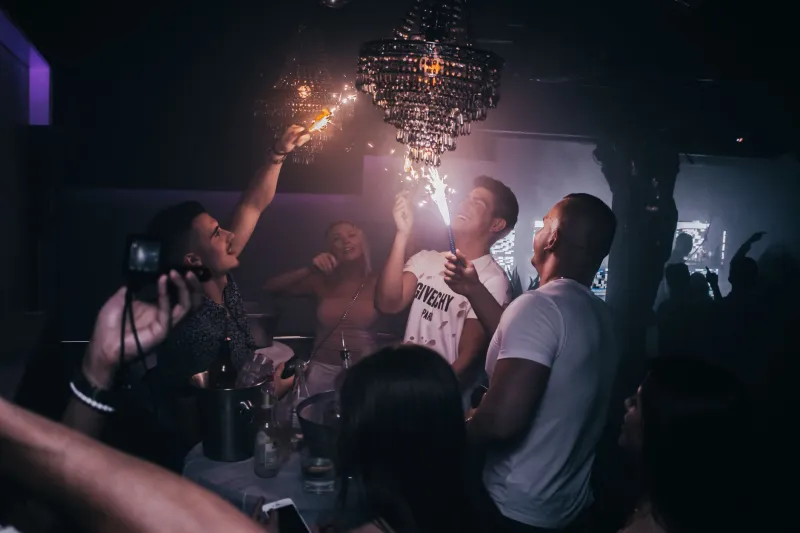
Let's start with a number: $34.99. That's roughly what a 750ml bottle of Grey Goose costs at Total Wine. Write that number on your hand before your next Scottsdale nightclub visit, because by the time a server in a cocktail dress delivers that same bottle to your table with a sparkler and a fruit tray and a crowd of strangers watching you like you just won something, you will have paid somewhere between $350 and $600 for it. And — this is the important part — you will feel good about it.
That feeling is the product. The vodka is just the delivery mechanism.
The Table Minimum: Where the Math Gets Creative
Before we even get to the bottle itself, there's the table minimum — the foundational layer of the bottle service economy that most first-timers don't fully understand until they're already seated.
Table minimums in Scottsdale's top venues typically range from $500 to $2,500 depending on the night, the venue, and the table's position in the room. This is not the price of the bottle. This is the minimum amount you must spend to occupy the table. The bottle is purchased against that minimum, not instead of it.
So when a promoter tells you the minimum is $600, what they mean is: you will spend $600 in this spot tonight, whether you wanted to or not. If a bottle of Casamigos costs $350 at that venue, you've covered just over half your minimum. You'll need another bottle, or a series of overpriced mixers, or a round of shots that cost $28 each, to get there.
The table minimum is the invisible price tag. Everything else is just the math you do to hit it.
The Markup Architecture: How $35 Becomes $400
Here's the cost breakdown as best as industry sources and frankly just common sense will allow:
A standard 750ml bottle of mid-tier premium vodka (Grey Goose, Belvedere, Ketel One) costs a venue somewhere between $18 and $28 wholesale, depending on volume purchasing agreements. Retail, as established, you're looking at $30 to $40. At a Scottsdale nightclub, that same bottle will be priced between $300 and $500 on a standard night, and considerably more during special events, holidays, or any night where demand justifies creative pricing.
That markup — somewhere between 900% and 1,400% — is where the venue's entire economic model lives. The cover charge covers the door staff and basic overhead. The bottle service markup covers everything else: the real estate, the sound system, the DJ who flew in from somewhere impressive-sounding, the LED lighting grid, the social media team, and the sparklers that cost about $0.40 each and are presented like they're part of the experience (because they are).
The Psychology of Perceived Value
Now here's where it gets genuinely interesting, because the markup alone doesn't explain why people do this voluntarily and repeatedly. The answer is that bottle service isn't really a beverage purchase — it's an experience purchase with a very specific set of psychological components.
Status signaling. You have a table. The people standing at the bar do not. In the social economy of a Scottsdale nightclub, this distinction matters enormously to a certain type of person, and the venues understand this with remarkable precision. The table isn't just seating. It's a declaration.
The group math illusion. Splitting a $400 bottle eight ways sounds like $50 each, which sounds almost reasonable. What gets quietly forgotten is the table minimum, the mandatory service charge (usually 20-22%), the taxes, and the additional bottles that materialize because you're already committed and another round sounds good. The per-person number almost always doubles before the night is over.
The sparkler effect. This deserves its own line item. The theatrical delivery of bottle service — the sparklers, the servers moving in formation, the music cue — serves a specific purpose beyond entertainment. It makes your table visible. It signals to the room that you spent money. It turns a transaction into a performance. And critically, it makes everyone at your table feel like the purchase was worth it before they've taken a single sip.
The Mixer Trap
If the bottle is where the markup is dramatic, the mixers are where it becomes almost comedic. A Red Bull at a Scottsdale club runs $12 to $18. Cranberry juice — actual cranberry juice from a bottle that costs $4 at Fry's — will appear on your tab as a $14 mixer. Tonic water. Simple syrup. Ice. These are not premium products receiving premium treatment. They are margin extensions dressed up as hospitality.
The mixer trap is particularly effective because by the time you're at the table, sparkler delivered, group assembled, you are not in a comparison-shopping headspace. You're in a yes headspace. And the venues engineer the entire arrival sequence specifically to get you there.
How to Not Get Completely Fleeced
None of this means bottle service is inherently a bad decision — for the right group, the right night, and the right venue, it genuinely delivers value in the form of space, service, and experience. But going in informed changes the math considerably.
First: negotiate the minimum before you commit, not after. Minimums are sometimes flexible, especially earlier in the week or for larger groups. Ask directly. The worst answer is no.
Second: BYOM is not a thing, but knowing which bottles offer the best volume-to-price ratio at a specific venue is. Bigger bottles (1.75L handles) often represent better value per ounce than standard 750ml bottles, and not every venue pushes them because the optics are less impressive. Ask anyway.
Third: cap the mixers early. Decide before the bottle arrives what you're mixing with and communicate it clearly. The additional mixer charges are where tabs quietly inflate between rounds.
Fourth: count the service charge before you celebrate hitting the minimum. A $600 minimum with a 22% service charge is a $732 night before you've tipped a dollar.
The bottle service economy isn't going anywhere. It's too profitable, too psychologically effective, and too deeply embedded in what Scottsdale sells itself as. But knowing the machinery behind the sparkler doesn't make the sparkler less fun. It just means you're the one person at the table who isn't surprised by the bill.